From Gdynia to Norfolk: North Carolina’s Polish Community Tours the Legendary Tall Ship "Dar Młodzieży"
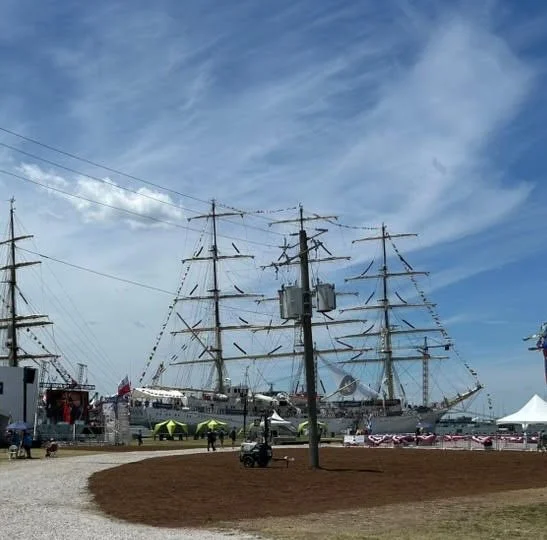
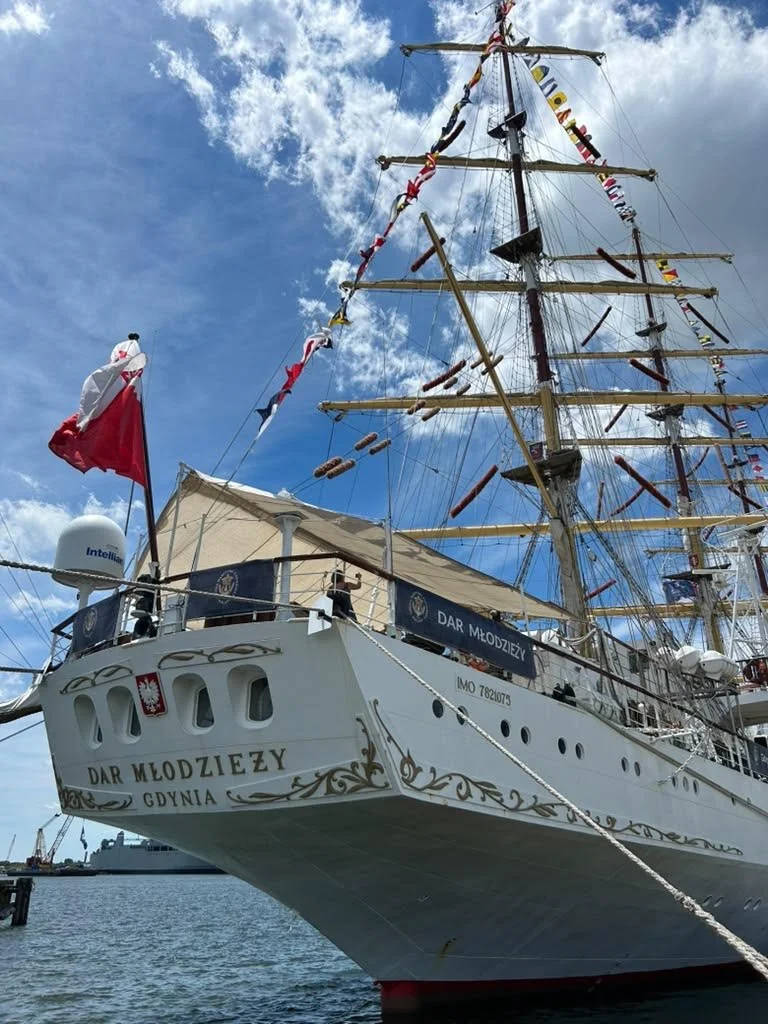
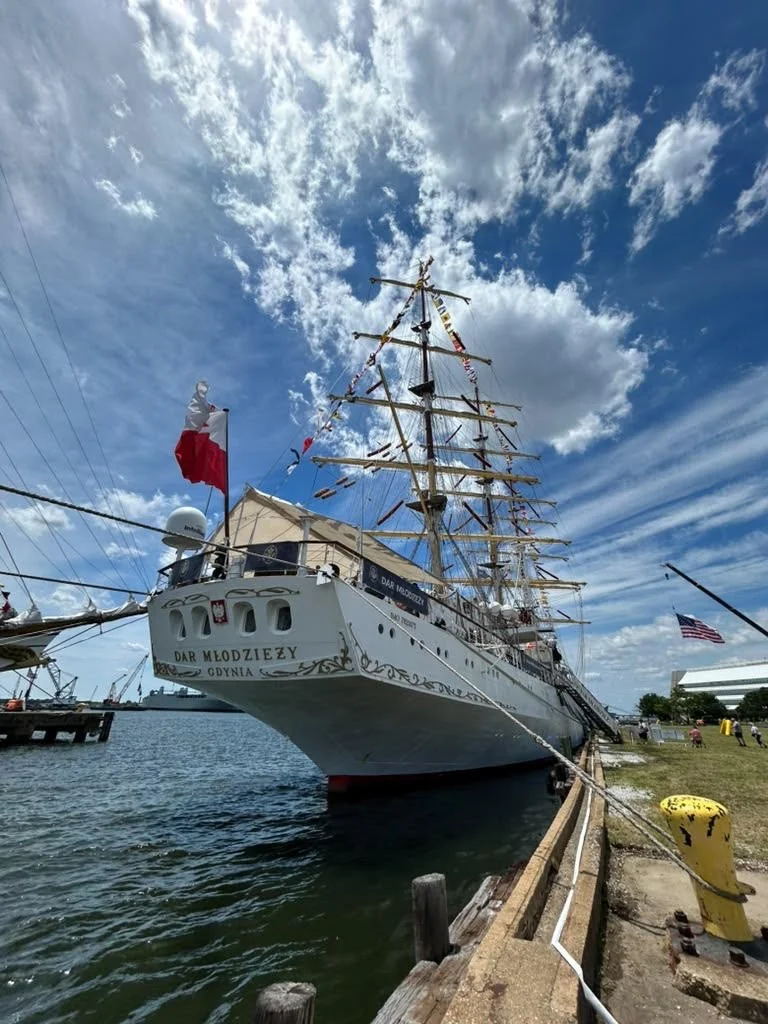
After a nearly four-hour journey, the Polish community from North Carolina finally caught sight of three 50-meter masts and the Polish flag fluttering in the wind. The majestic "Dar Młodzieży" docked in Norfolk, Virginia, from June 19 to 23. The vessel arrived in the United States to join the Sail250 international rally, taking part in the opening parade to celebrate the 250th anniversary of US independence. The tall ship is now on its way to New York to participate in the grand finale of the celebrations and the historic July 4th Parade of Sail on the Hudson River.
Commandant Michał Sadowski emphasizes the historic nature of this voyage. "'Dar Młodzieży' is retracing the footsteps of 'Dar Pomorza' exactly 50 years later," Sadowski noted. "The media is showing a massive amount of interest, and this will likely be our last such long-distance voyage." The 44-year-old tall ship is crossing the Atlantic for the first time in this specific role. The voyage also marks the 100th anniversary of Gdynia, the ship's home port. Although the crew is sailing a freshly renovated ship, it will only remain in service for a few more years to train future maritime personnel. In fact, authorities have already launched a bid for its more modern successor.
The crew only stepped on dry land once during the initial phase, making a brief stop in the Bahamas four weeks after setting sail. "This is a long journey for these first-year students from the Maritime University in Gdynia. It's their very first expedition out to sea, far from home, but they are keeping a positive outlook," the commandant shares. "On day one, I teach them how to conquer seasickness: with hard work and fresh air," he explained. "The students handled it well, and I take great pride in the fact that we crossed the entire ocean purely under sail." Excellent weather and prosperous winds aided their journey, as "Dar Młodzieży" actually clocks faster speeds under sail than under engine power. The engine only runs during a calm (windless weather) or when maneuvering into port, capping their speed at 10 knots (11.5 mph). During this crossing, a favorable trade wind pushed "Dar Młodzieży" from behind, allowing the crew to set nearly all sails and hit peak speeds of up to 16 knots (approx. 18.4 mph). "A clean hull guarantees good speed," the commandant added.
"It only rained for a few days," noted Mikołaj Słodki, a trainee (deck cadet) and first-year navigation student. Rain makes conditions tough because a slippery deck complicates daily tasks. "But we don't dwell on that," he concluded with a smile.
Beyond their theoretical classes, the 140 students on board divide themselves into 40-person deck watches. They work four-hour shifts, with each watch handling a single mast. Mikołaj explained during our tour that three watches need just 30 minutes to set all the sails. Pointing toward the bow, he described how trainees spring into action at the sound of a command, grabbing the ropes and running backward along the hull in a tight "string of bodies." The process looks like a giant game of tug-of-war, but it successfully hoists five large square sails that instantly catch the wind. Commandant Sadowski orchestrates the entire operation, relaying radio orders to his watch officers, who each manage a specific mast. The officer then coordinates with the boatswain and instructor, who use traditional whistles to direct the cadets across the deck and up the rigging. "Everyone knows their job and exactly where to report," Commandant Sadowski stated. For added safety, 33 permanent crew members sail alongside the students.
The commandant stresses that clear communication keeps the ship running smoothly. Every morning at 7:50 AM, the entire crew assembles on deck to raise the (Polish) ensign. "That's when we brief everyone on planned events and maintenance work. When tough situations hit us—like a recent air conditioning failure—we must update the trainees honestly. They need to know what we can fix ourselves and what we can't when we are sitting in the middle of the ocean."
What does a typical night look like for the commandant? While the captain does not stand night watch, the officers can ring him at any hour. This happened quite frequently with the younger officers early in the voyage. "Standard procedure requires the watch officer to call me if visibility drops, a malfunction occurs, or if they have any doubt at all." The commandant still regularly climbs onto the yards—the horizontal crossbeams holding the sails high above the deck. "I still go up myself for mast inspections," he admitted. Alongside work and study for the first- and second-year navigation students and first-year mechanics (who rotate on and off the ship in stages), the crew organizes sports days and movie nights under the stars on "Darek"—the affectionate nickname the crew gave the ship. The students also track local wildlife. Our youngest visitor eagerly asked Cadet Mikołaj if they hunt sharks and if the ship carries cannons. They don't hunt sharks, but the crew did spot dolphins, whales, flying fish, and sea turtles during the crossing.
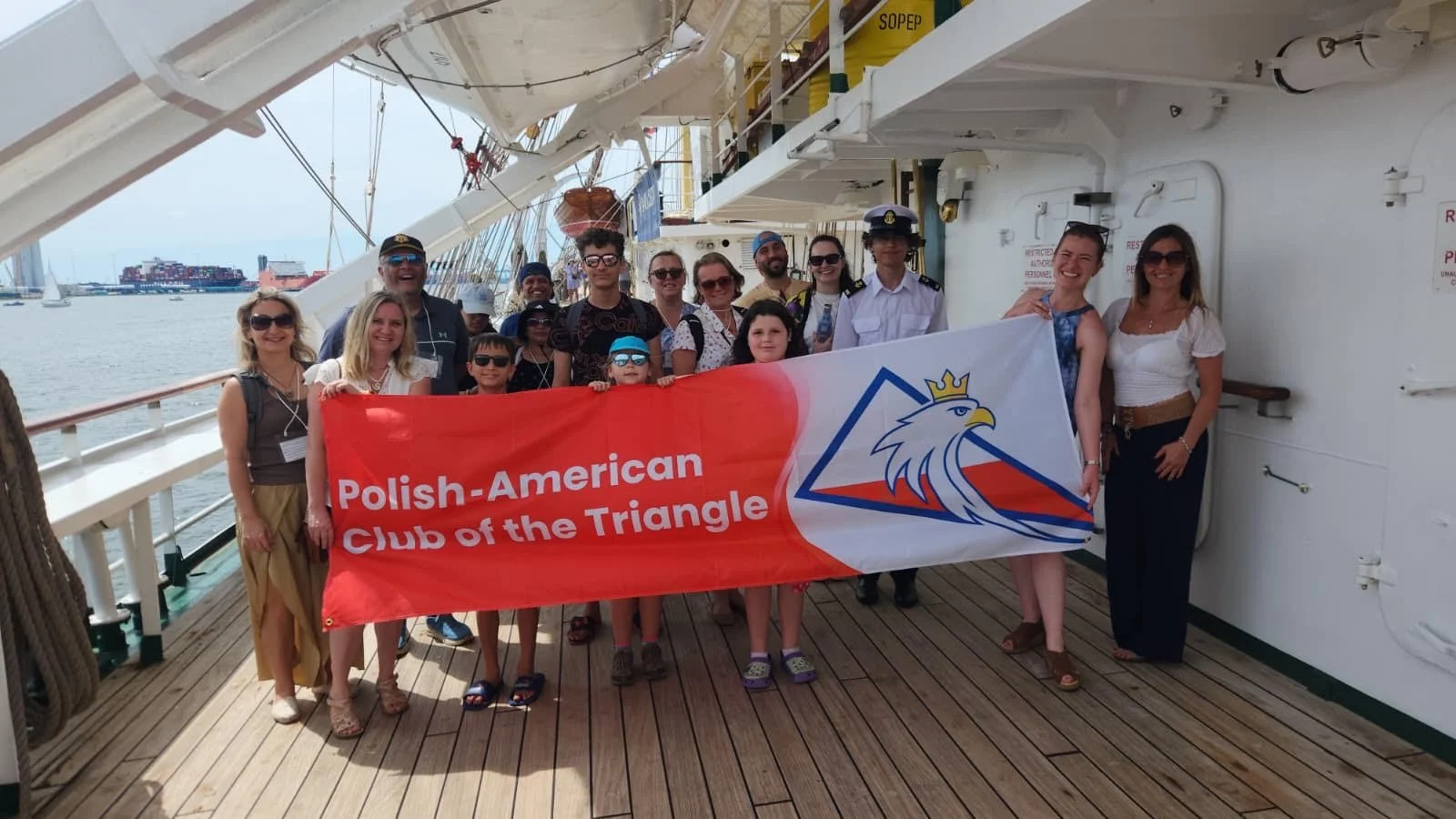
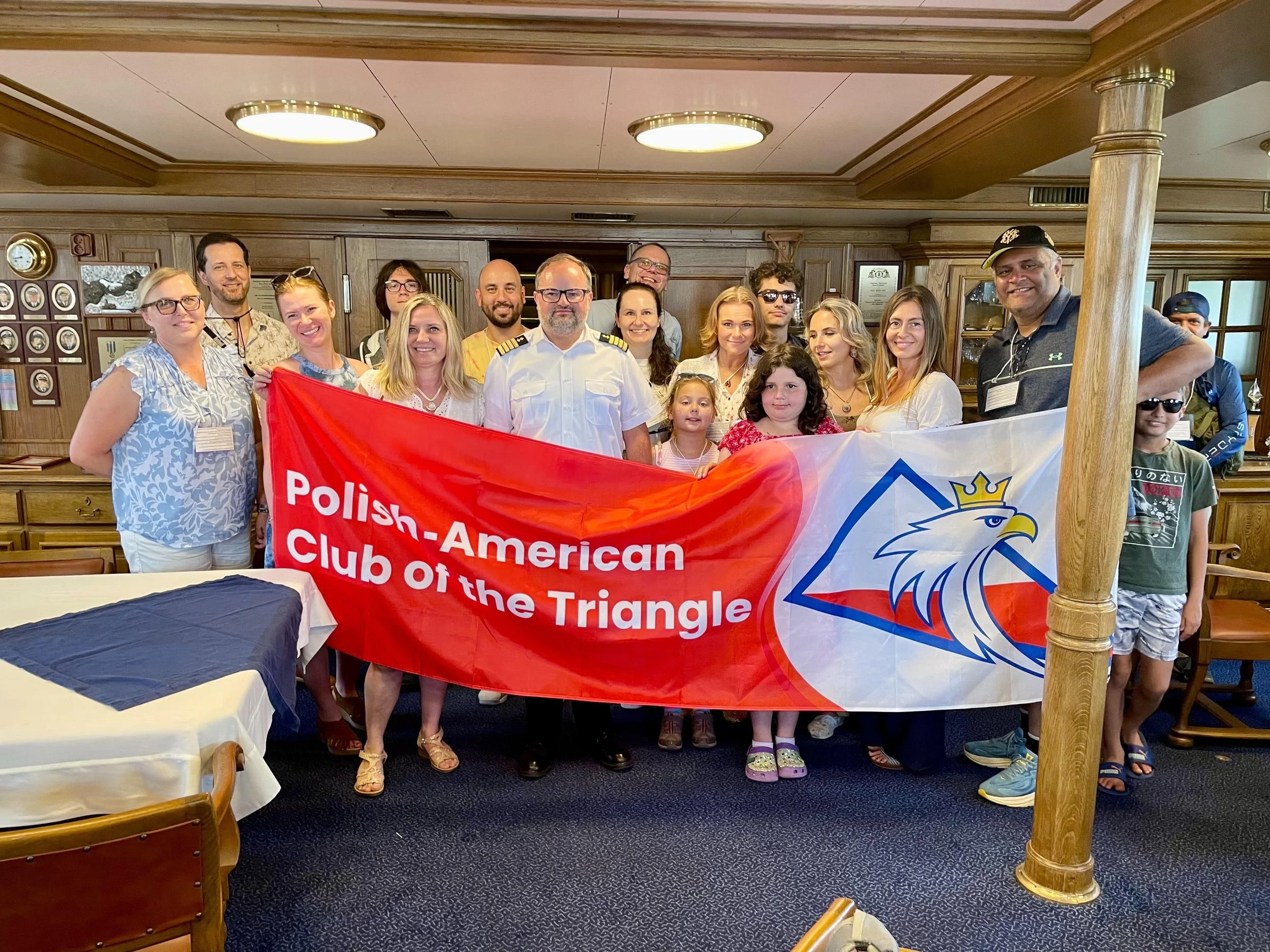
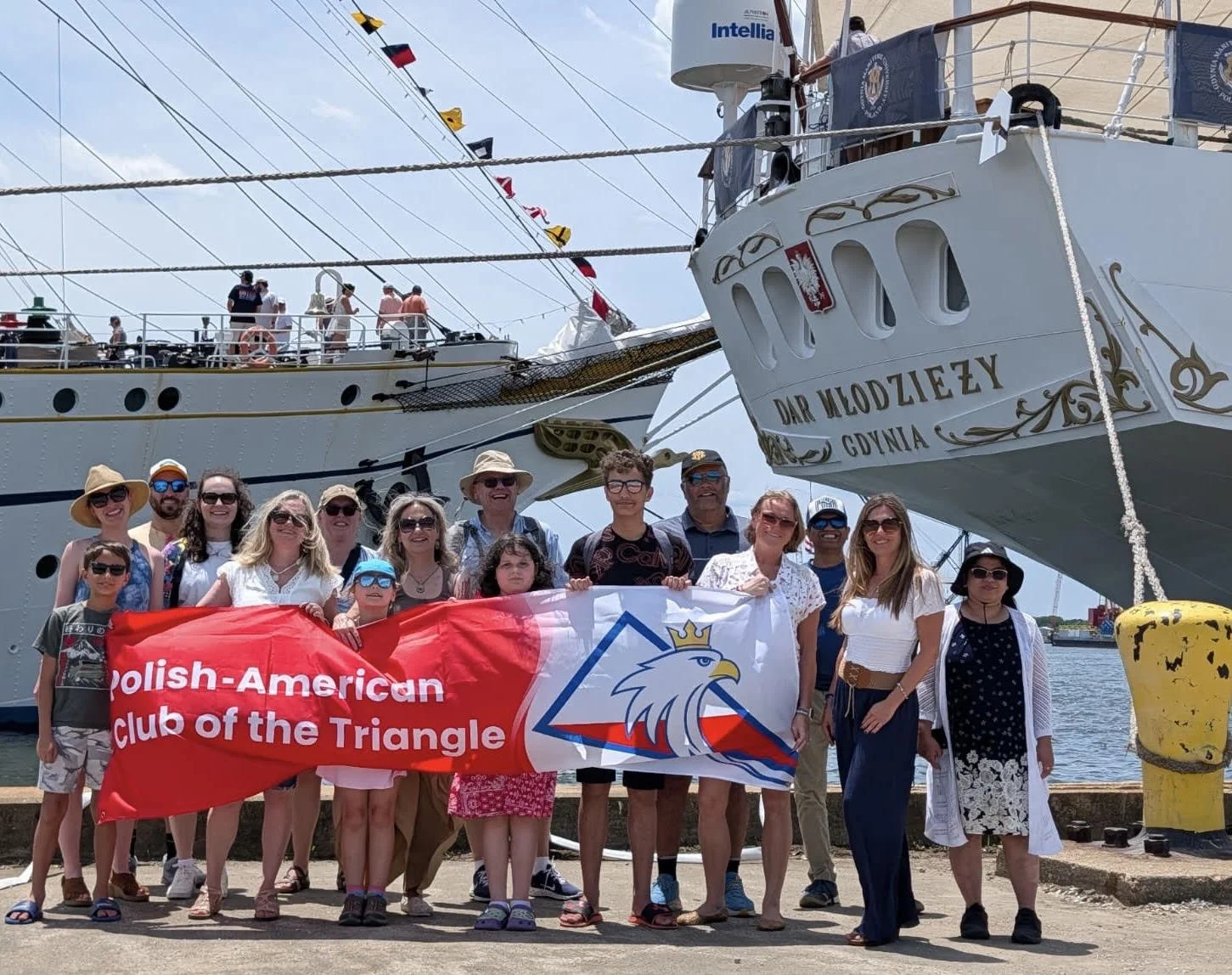
For the 24 members of the Polish-American Club of the Triangle from the Raleigh area (including President Joanna Pawlak, Vice President Anna Andrzejewska-Santiso, and Chief Communications Officer Anna Bylczyńska-Boer), boarding a tall ship that had sailed all the way from Poland was an unforgettable experience. The crew “rolled out the red carpet” for the Polish community, opening the captain's bridge for tours and inviting guests into the captain's salons. There, the commandant and his crew patiently answered questions and shared stories. The PAC group walked away deeply impressed by the sheer scale of the student training program on "Dar Młodzieży." Many were thrilled to discover that anyone can write to the shipowner to book a "tourist" spot, as the ship reserves about 12 berths for civilian travelers. The high-tech captain's bridge drew plenty of admiration, especially since the crew let the guests enter despite the prominent "Crew Only" sign. "We became a part of history," Vice President Andrzejewska-Santiso summarized.