The Return of Polish Folk Dance and Krakow’s Lajkonik to North Carolina
Folk dance and the traditional figure of the Lajkonik have returned to the Polish-American Club of the Triangle (PAC) in North Carolina after a twenty-year absence. This vibrant revival succeeded thanks to the hard work of dedicated members and the new Board of Directors.
“Inquiries from international festival organizers made it clear—we needed our own dance ensemble,” said Joanna Pawlak, who took the helm as PAC president in April 2026. “Our love for tradition, a genuine calling from the heart, and our firm belief that dance and music unite people inspired us to create a dance team called Polish Spark.”
A Lightning-Fast Mobilization
Only two weeks passed between the initial inquiry from the Around the World festival organizer, the board’s green light, and the group's official stage debut. In that brief window, eleven women with diverse backgrounds stepped up to form the ensemble. The roster features performers from Polki NC—an independent modern Polish folk-fusion group directed by former Vice President Agnieszka Szkudlarek—as well as alumni of university folk and Latin dance groups. Several members joined with no prior stage experience but brought an immense passion for dance. The lineup unites women from all walks of life, including chemists, research scientists, a nurse, a real estate agent, PAC board members, corporate professionals, and busy mothers. So far, however, the group has not managed to recruit any male dancers.
The Good Old Days
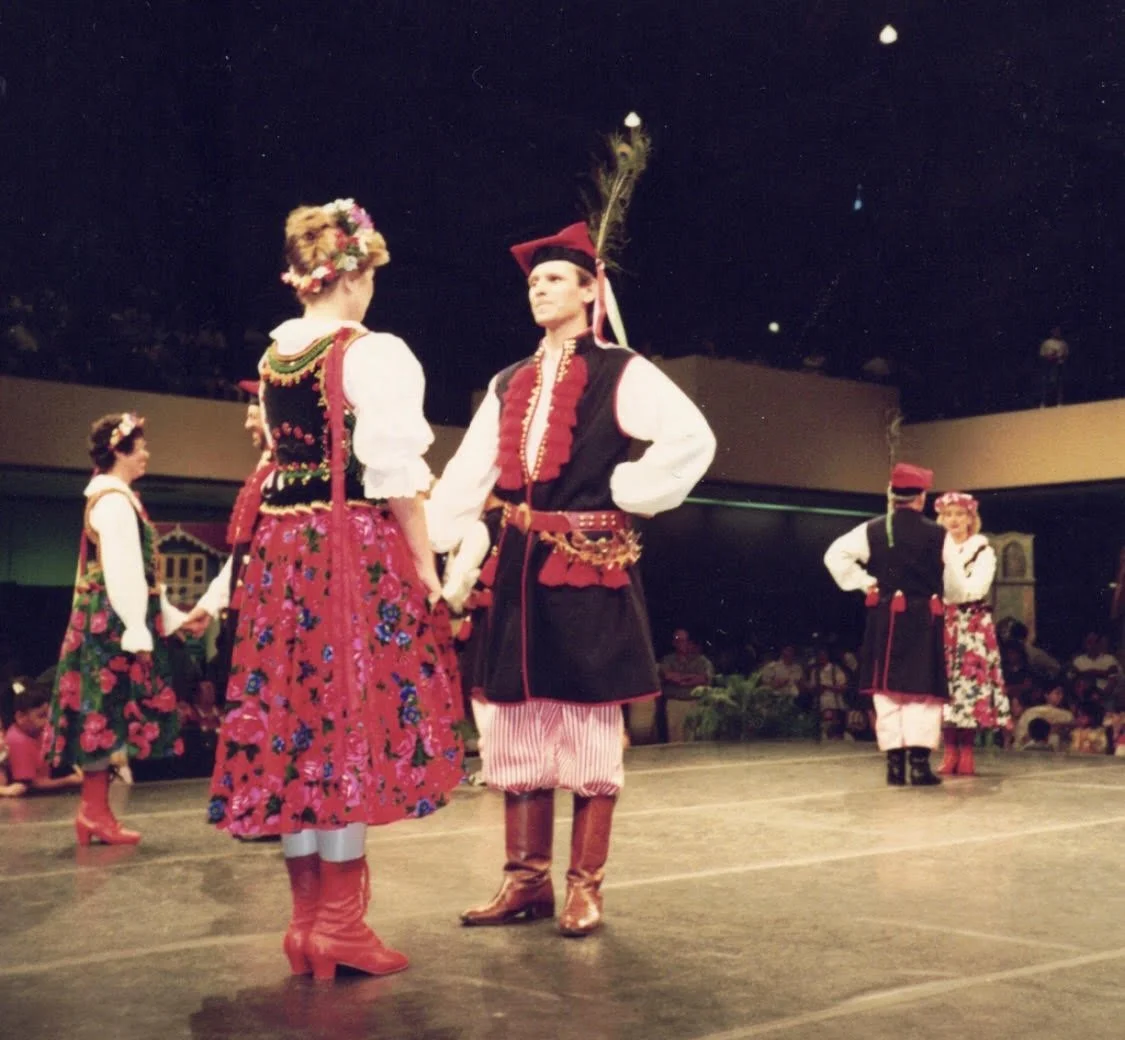
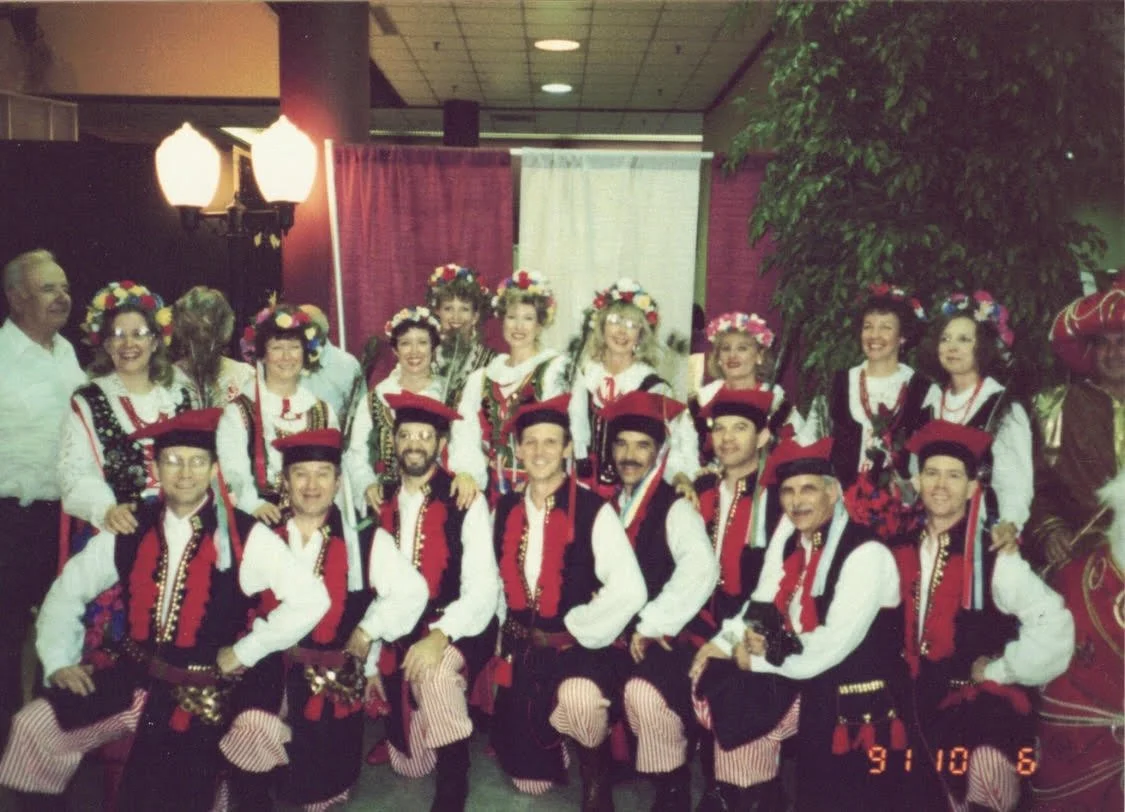
Twenty years ago, the community enjoyed a very different landscape. The original ensemble—the Polish-American Dance Group—boasted eight couples who performed in authentic folk costumes imported directly from Poland.
“The group I danced with performed from 1989 until 2008, or perhaps even longer; no one remembers the exact timeline anymore,” recalled Piotr Nowak, a retired American Airlines mechanic and longtime PAC member.
Chronicle records show, however, they ordered the costumes in 1990, and the group performed for the first time in 1991.
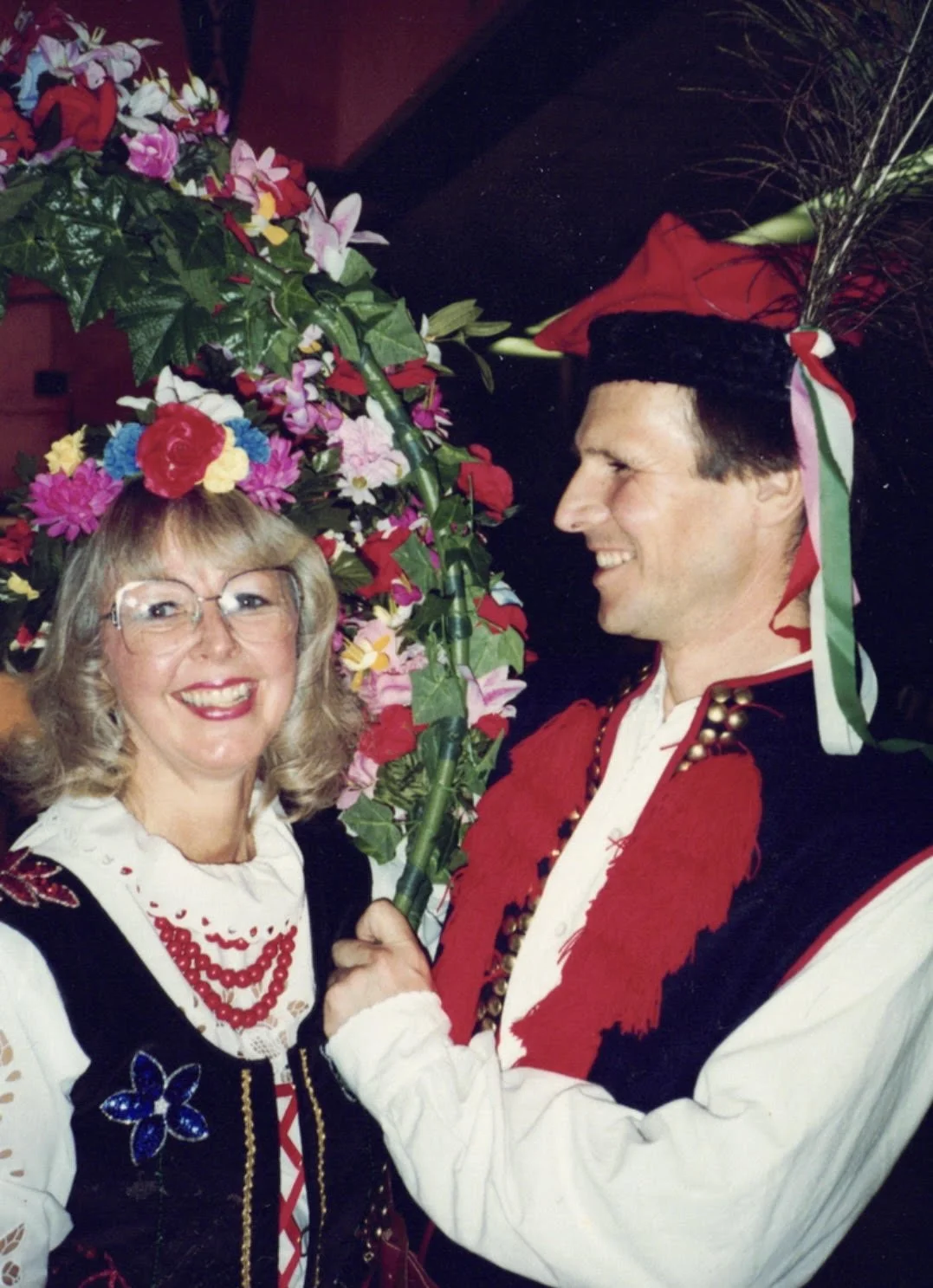
Piotr Nowak still treasures video cassettes of those classic performances. The footage captures him leaping into the air with mid-air spins during his favorite piece, the white mazurka, sporting traditional black leather boots. He wore a classic embroidered vest while his partner danced in a vibrant corset intricately detailed with sequins, adorned with red coral beads.
“At first, I wondered what my friends would say when they saw me with a feather in a hat on my head,” laughed Piotr Nowak. Ultimately, those worries did not stop him from dancing for nearly two decades at cultural events, festivals, churches, and community centers. “The work required intense, demanding preparation, but it brought us incredible rewards and joy.”
“We danced kujawiaks, polonaises, and obereks,” added Zosia Storoszczuk, a dancer from the original group and a former Solidarity activist who emigrated from Poland in the 1980s. “Back then, both Poles and Americans danced together. As time went on, however, our dancers grew older and lost their stamina, and the youth showed little interest in taking up folk dancing. That is how the original group eventually dissolved.”
High-Speed Preparations and "MacGyver's" Magic Touch
The group pulled off the official revival in August 2026, despite lacking professional attire or male dance partners.
“We operated at an incredible pace,” explained Anna Bylczyńska-Boer, PAC Chief Communications Officer. “We gathered volunteers, sewed skirts, bought shawls to use instead of corsets—which we are currently hand-embroidering under the guidance of PAC Treasurer Jowita Mikołajczyk—prepped decorations, and rescued a broken Lajkonik from a garage where mice had been running over it. We handed the prop over to our PAC’s resident 'MacGyver,' Andrzej Rusztowicz, who repaired it just in time because the Lajkonik absolutely had to share the stage with us.”
The sewing and craft preparations moved forward full steam. PAC Vice President Anna Andrzejewska-Santiso spent days sewing skirts for the dancers using fabrics ordered by the president or delivered by Patrycja Molenda, a Polish Spark dancer. Meanwhile, President Pawlak made the aprons. The entire ensemble gathered at the president’s house to decorate festival arches with flowers—a traditional harvest symbol needed for the choreography—and to transform a ribbon-adorned umbrella into a spinning spindle. The prop is a central element for the dance to the classic song Prząśniczka (The Spinner). The song, which serves as the anthem of the city of Łódź, tells a humorous tale about a young spinner who refuses to wait for her boyfriend's return and finds a new love after just three days. To her great shame, her thread snaps. Polish Spark’s choreography brings this exact story to life on stage.
Building Bridges and Educating Through Art
“I joined Polish Spark to showcase Polish traditions, costumes, music, and dances to the American community and to build bridges between cultures,” explained Marta Garbacz, a research scientist who implements new oncology diagnostic testing. Despite having no prior dance experience, she joined the group to maintain regular contact with Polish speakers who shared her cultural upbringing.
Marta Garbacz takes center stage holding the umbrella-spindle, spinning it at the climax of the song with the raw enthusiasm of a rock guitarist.
“We use unique props like the spindle or the character of the Lajkonik, which naturally intrigue the audience and encourage them to ask questions about the stories we tell through dance. This element makes our performances educational rather than just visually engaging. Audiences leave with a much deeper understanding of Polish folklore and history,” Garbacz added.
Rehearsing in Blistering Heat
The group choreographed the entire routine, set to five traditional musical pieces, in just two weeks. During this time, the dancers held four two-hour rehearsals in a Cary park, where they had to talk to another dance group to let the use a sheltered spot under the pavilion. Practicing outdoors in the sweltering heat, with temperatures soaring above 95°F did not deter the team. Amid laughter and initial missteps, the members of Polish Spark pushed forward, even practicing in the dark on a parking lot right before the premiere to perfect their formations.
The final rehearsal with the Lajkonik—despite an initial struggle to drape the colorful fabrics properly over its frame—immediately caught the attention of children and passersby in the park. At that moment, the group knew the character would become a massive hit.
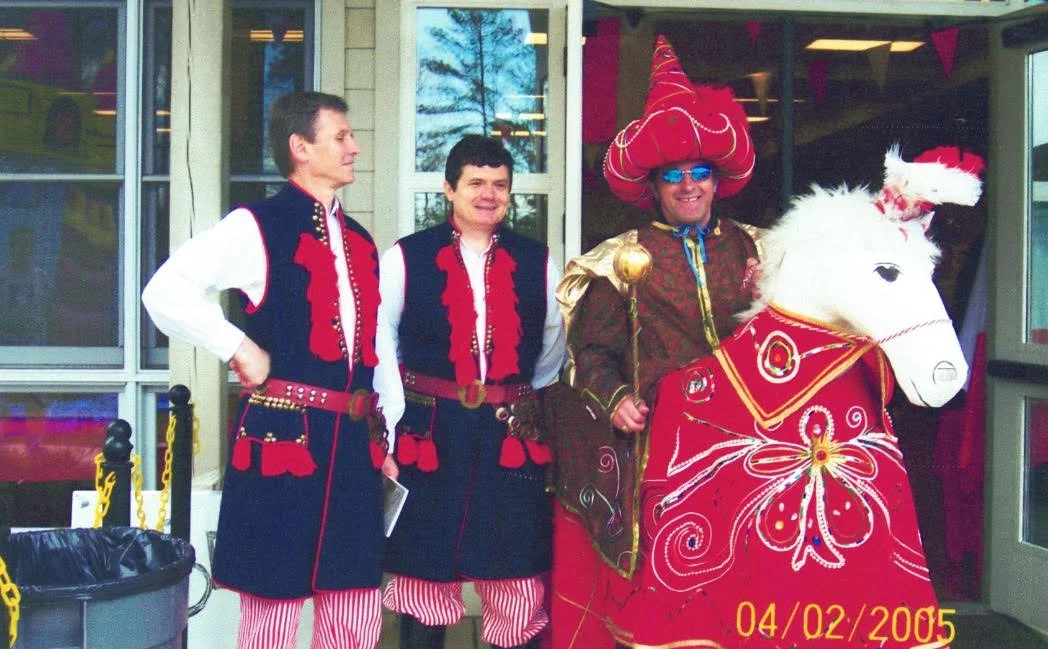
Anna Andrzejewska-Santiso stepped up to portray the Lajkonik, enduring a scratchy faux beard and mustache because none of the local men would take on the role. After the team helped her into the heavy, 11-pound frame and she donned the bulky Tatar costume, she took her first rehearsal steps with a bit of hesitation. However, the group's vibrant energy and a modern, rock-infused musical arrangement quickly swept her up. She ended the routine dynamically rushing toward the dancers, playfully startling them with her mace.
The choreography, where the dancers encircle the Lajkonik in an increasingly tighter formation, highlights the saving of Krakow from a Tatar invasion in the year 1287. According to historical legend, local Vistula river rafters surprised the sleeping invaders. Following their victory, they rode triumphantly into the city on the fallen Tatar leader's horse, dressed in his ornate, oriental attire.
“For me, it is an iconic figure that recalls Poland's rich history as a bridge between the East and the West,” said Andrzej Rusztowicz, a software programmer and hobbyist handyman. “Before moving to Raleigh, my family and I lived right by the Main Market Square in Krakow.” They regularly saw the real Lajkonik in action, always surrounded by delighted school field trips. “The Lajkonik simply belongs in the show because it delivers incredible energy and brings a genuine piece of Krakow with it.”
Thanks to Andrzej Rusztowicz, the prop functions perfectly once again. He connected the horse's head to the hindquarters using thicker metal tubes in the front and thinner ones in the back, creating a structure that is both sturdy and easy to disassemble. Meanwhile, Anna Cofała, a painter, repainted the muzzle and the faded nostrils of the horse. Together with her husband, Zbigniew Cofała, they restored the mane, giving the Lajkonik a significantly fresher look.
The Grand Premiere and Dreams of Rzeszów
Before their debut performance at the Raleigh Theater, the dancers naturally felt some stage fright, even though they had prepared well. However, excitement quickly took over. Mariola Bereśniewicz-Kopciński expressed pure joy at being able to perform alongside fellow Polish women. Her daughter, Veronika Kopcinski, who joined the project at her mother's encouragement, noted after the show that thanks to the intensive rehearsals, everything felt completely natural on stage.
“Seeing how deeply everyone invested themselves in this project, finding the time for demanding rehearsals and hand-crafting the attire, I knew we were creating something truly special,” recalled Joanna Pawlak.
The local audience received the debut performance with immense warmth. “We heard so many wonderful words and compliments,” shared Ewelina Jakubowska.
Looking ahead, the group dreams of expanding its roster and repertoire, incorporating partner dancing, and acquiring authentic, professionally-made folk costumes. “It would be fantastic if we could get some men to join the ranks,” Anna Andrzejewska-Santiso remarked.
“I am delighted that we already have a flurry of invitations to local cultural festivals and such a warm reception from the community,” concluded Joanna Pawlak. Her ultimate goal and dream features the Polish Spark performing three years from now at the World Festival of Polish Diaspora Folklore Ensembles in Rzeszów, Poland.
“Polish Spark's performance acted as a true spark that revived Polish folk dancing, and brought the Lajkonik back to the Polish-American Club of the Triangle,” smiled Anna Bylczyńska-Boer.